
The Anatomy of an Injection Mould: Understanding the Components of Precision
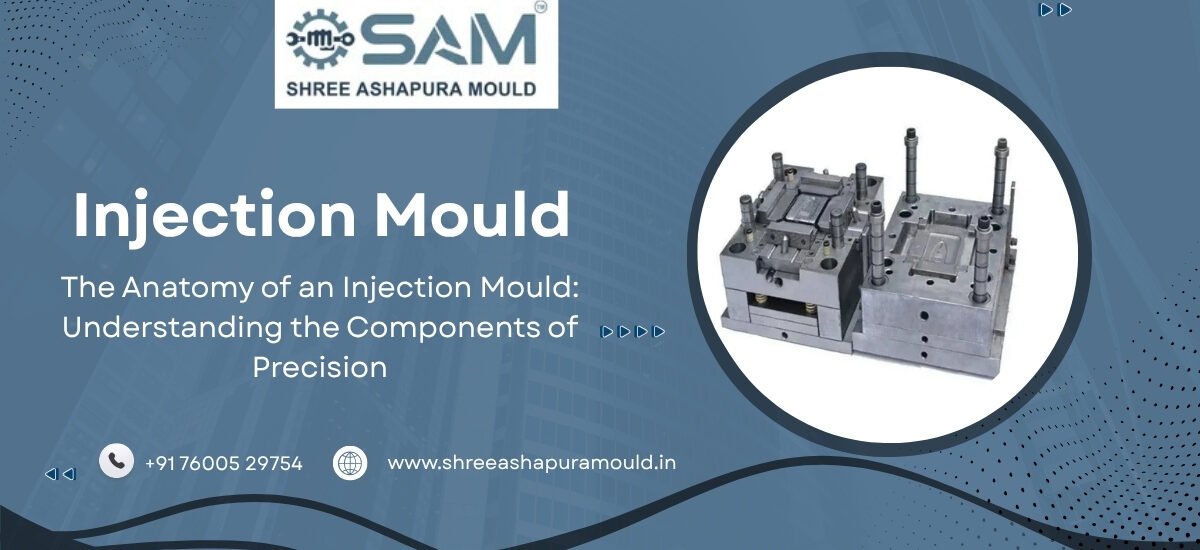
At Shree Ashapura Mould, we often say that a mould is the “heart” of your manufacturing line. If the heart isn’t built correctly, the entire production process suffers. For business owners and procurement managers, understanding the anatomy of an injection mould is the key to identifying why certain moulds perform better, last longer, and deliver higher quality products.
While every mould is customized to a specific product—whether it’s a PET Preform, a PP Cap, or a Household Item—they all share a fundamental architecture.
The Core Components of an Injection Mould
1. The Cavity and the Core
These are the two most important halves of the mould.
The Cavity: This is the “female” side of the mould that forms the exterior shape of your product.
The Core: This is the “male” side that forms the interior shape of your product. When these two pieces meet, they create the exact void that will be filled with molten plastic. The precision of this fit is what determines if your final product is flawless or prone to defects like “flash.”
2. The Runner System
As discussed in our previous guide, this is the network of channels that directs molten plastic into the cavity. It ensures the plastic reaches every corner of the mould at the correct pressure and temperature.
3. The Sprue
The sprue is the initial point of entry where the plastic from the injection machine enters the mould. A well-designed sprue ensures a smooth transition of material into the runners, preventing turbulence that could lead to air bubbles or weakened structures.
4. Ejection Pins
Once the plastic has cooled and the mould opens, the part needs to be removed. Ejection pins are the mechanical components that push the finished product out of the mould. At Shree Ashapura Mould, we calculate the placement of these pins to ensure they don’t leave marks on your final product, maintaining a premium finish.
5. Cooling Channels
Hidden inside the steel blocks of the mould are the cooling channels. These circulate water to pull heat away from the molten plastic. Without an efficient cooling system, your cycle times would skyrocket, and your plastic parts might warp or deform as they cool.
Why Technical Precision Matters
For a manufacturer, a mould isn’t just a block of steel; it is a high-precision tool.
Steel Grade: Using the wrong grade of steel leads to rapid wear and tear.
Tolerances: We work with micron-level tolerances. If the alignment between the Core and Cavity is off by even a fraction, the thickness of your plastic parts will be uneven, which can lead to product failure.
Partner with Engineering Experts
Building an injection mould requires deep knowledge of thermodynamics, materials, and mechanical engineering. At Shree Ashapura Mould, we utilize advanced CAD/CAE software to design these components with perfect harmony, ensuring your production runs smoothly from the very first shot.
Are you planning your next moulding project?
Don’t settle for “near enough.” Invest in tooling that is engineered for performance.