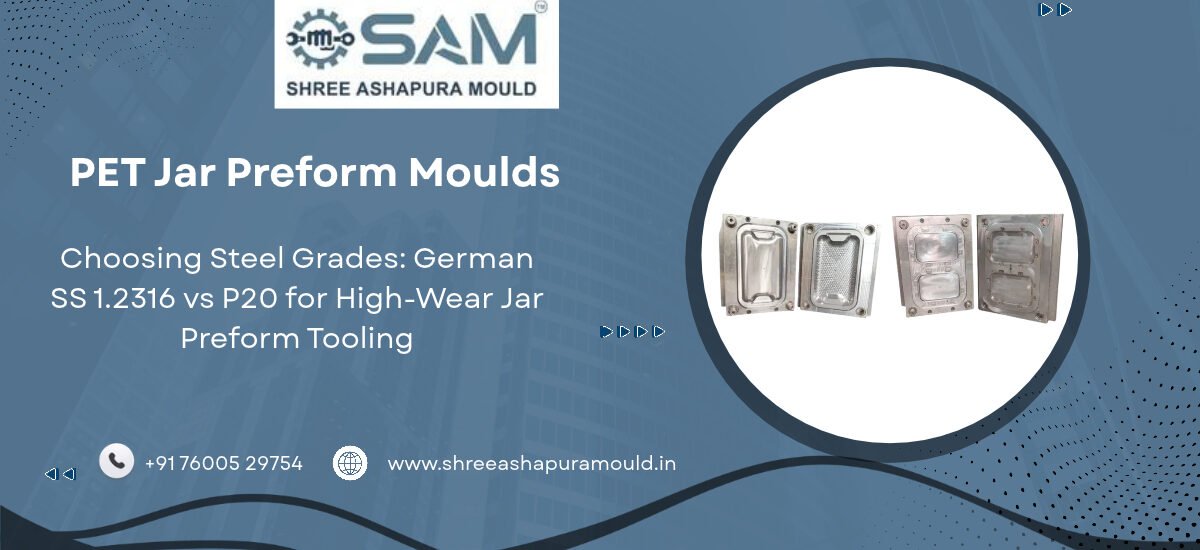
Choosing Steel Grades: German SS 1.2316 vs P20 for High-Wear Jar Preform Tooling
In high-speed PET injection moulding, the choice of tool steel used for core pins, cavity sleeves, neck rings, and mould base plates directly impacts maintenance costs, surface mirror finish, and total working lifespan.
Because wide-mouth PET jar moulds process large volumes of resin per cycle under high injection pressures and chilled water conditions, the tool steel is subjected to severe mechanical friction, thermal fatigue, and corrosive condensation.
Two of the most widely evaluated steel grades in plastic injection tooling are P20 (1.2311 / 1.2738) pre-hardened steel and German Stainless Steel 1.2316 (X36CrMo17 / AISI 420 modified). Understanding their metallurgical differences helps tooling engineers select the optimal material for their production demands.
Key Performance Factors for PET Jar Preform Moulding
1. Chromium Content and Corrosion Resistance
PET preform moulds operate with chilled water supply temperatures. In humid environments, water vapor constantly condenses on cold steel surfaces during mould opening.
Low chromium content in P20 steel offers minimal oxidation resistance. Surface exposure to ambient humidity can cause rust pitting on uncoated P20 cavity faces. High chromium content in German SS 1.2316 forms a passive oxide layer that protects tool surfaces against moisture condensation and chemical additives present in masterbatch pigments.
2. Material Hardness and Frictional Wear Resistance
Wide mouth jar preforms involve sliding friction along neck rings, taper locks, and ejection components.
The pre-hardened state of P20 steel allows ease of machining. However, lower yield strength increases vulnerability to scratches, taper galling, and parting line deformation under high clamping loads. Vacuum heat treated German SS 1.2316 maintains structural stability, sharp parting line edges, and precise thread geometries across extended continuous runs.
3. Carbide Grain Structure and Surface Polishability
The surface roughness of core pins and cavity sleeves determines the transparency of the molded PET preform.
German SS 1.2316 exhibits refined grain structures with minimal carbide segregation. This structural purity enables toolmakers to execute SPI A1 mirror polishing for maximum optical clarity and scratch-free preform surface finishes.
Tooling Application Engineering Standard
P20 Steel Application: Main mould bolster plates, backing plates, support blocks, and short run custom tooling where base structural rigidity is needed.
German SS 1.2316 Application: Direct melt contact parts including core pins, cavity sleeves, gate inserts, and split neck rings requiring high hardness, mirror polishability, and corrosion resistance.
Related Precision Tooling Solutions
Looking for high durability wide mouth tooling? Explore our dedicated PET Jar Mould manufacturing configurations engineered with premium German steel grades.
Need high speed beverage preform tooling? Learn about our complete PET Preform Mould product range.
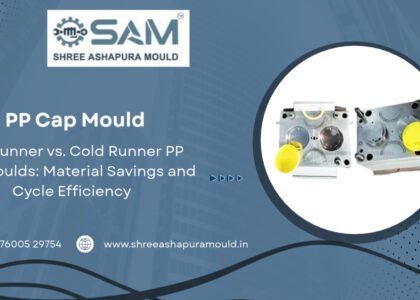
Complete your packaging tooling setup with precision machined PP Cap Mould solutions.



 Users Today : 5
 Users This Month : 86
 Total Users : 148